(aka Forpus crassirostris according to HBW, Volume 4, Page 449 but Brett Whitney and José Fernando Pacheco demonstrated that xanthopterygius was the correct name for the species in Bull. B.O.C. 119[4]: 211-214, 1999, alternative English name is Blue-winged Parrotlet)
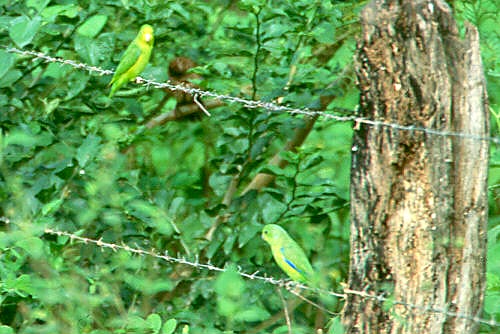
The Cobalt-rumped Parrotlet is the smallest Brazilian parrot weighing in at 26 g compared to the largest, the Hyacinth Macaw at 1500 g.
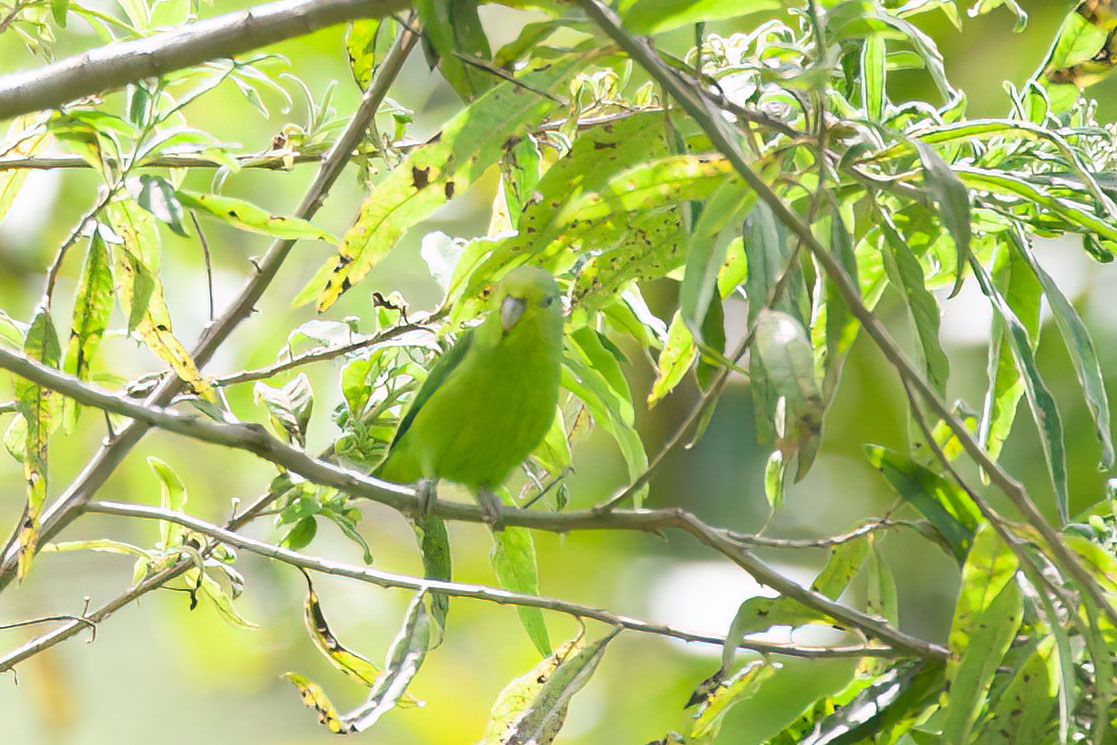
The Forpus genus is one of the few groups of parrots where females differ markedly from males. The male Cobalt-rumped Parrotlet shows blue along the edge of the wing and on the rump while the female is all green apart from a yellowish tinge on the head and flanks.
They nest in holes in trees and fence posts as well as using Rufous Hornero nests.
Food consists of fruit and seeds including grass seeds and they are particularly fond of Cecropia catkins.
| Previous Page | Back to Index | Next Page |