Brazilian name: Juriti
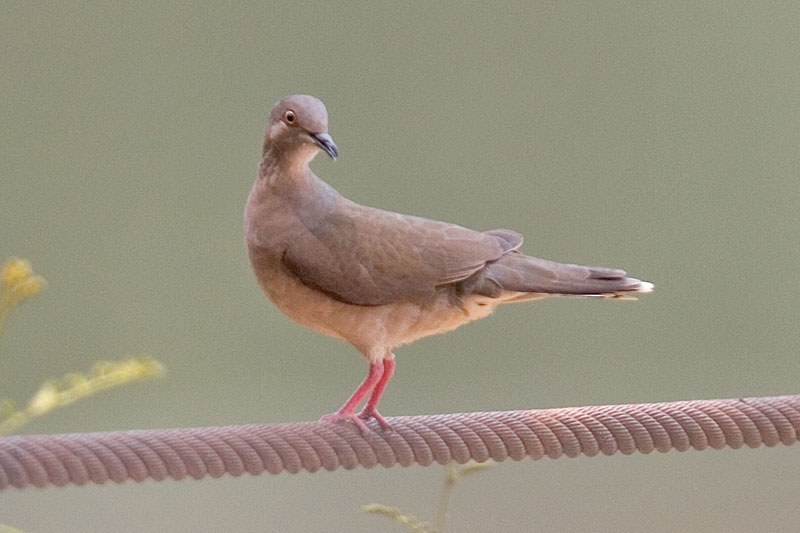
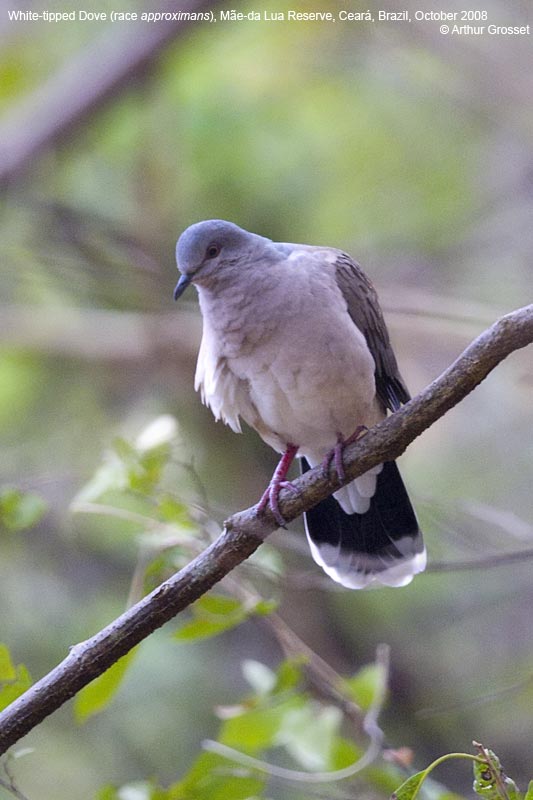
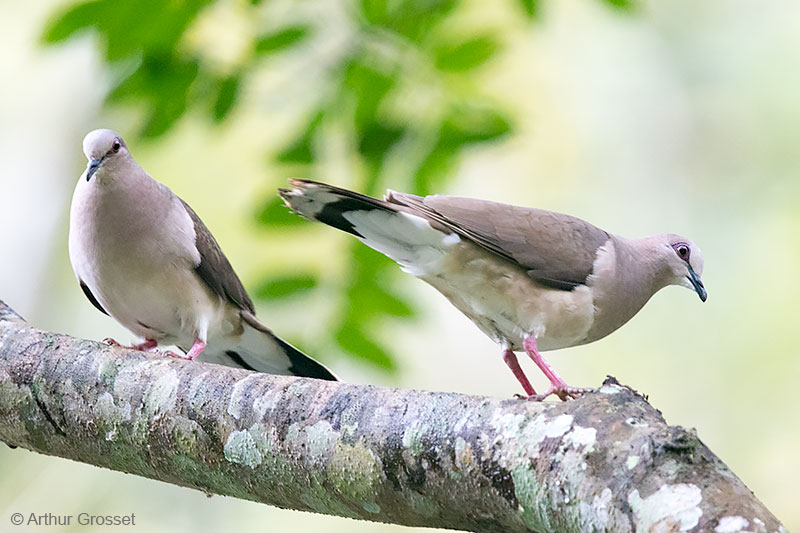
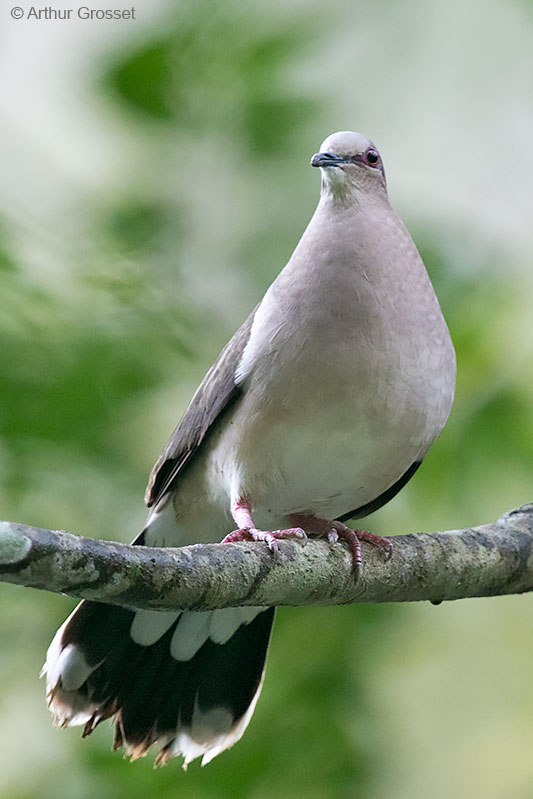
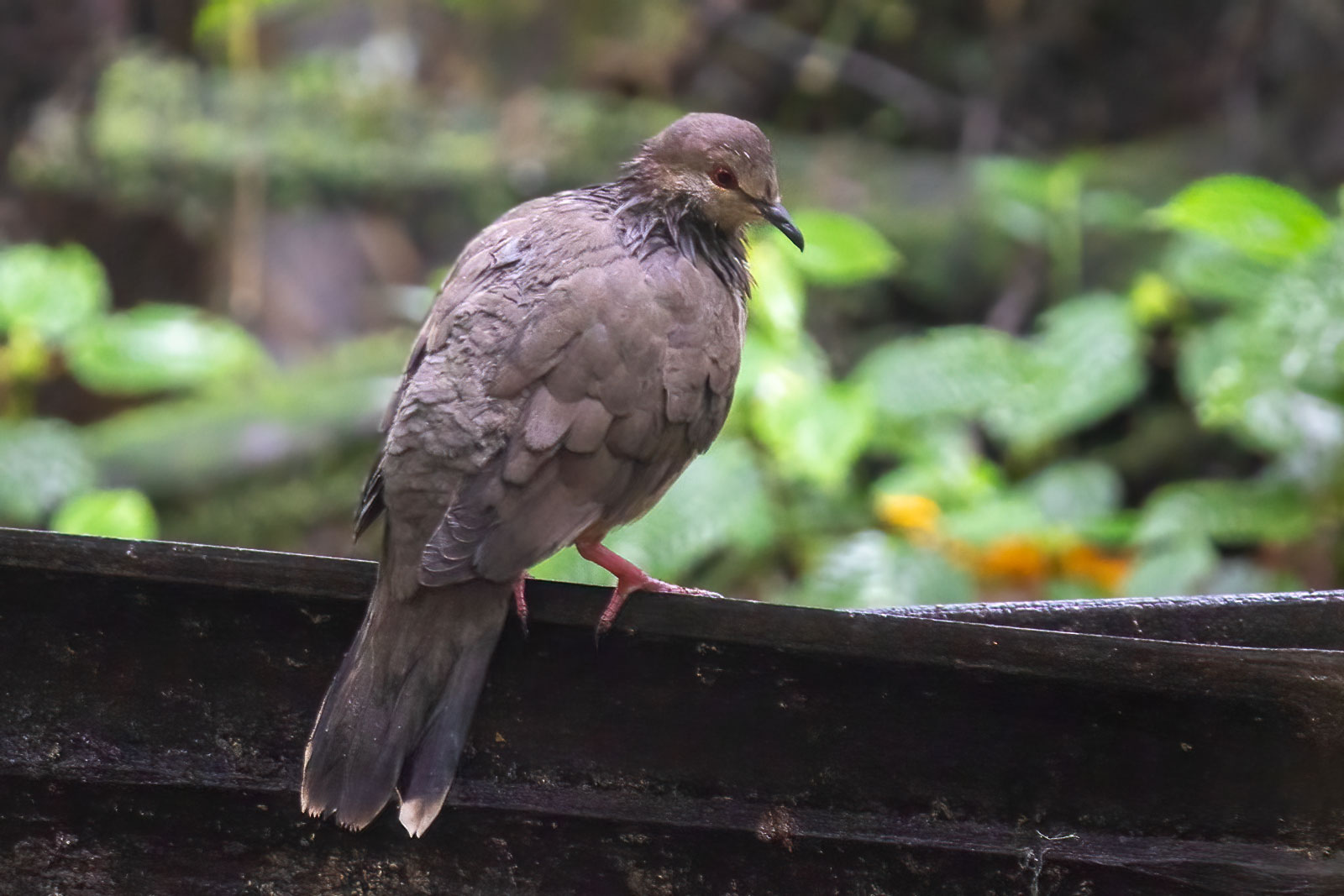
The White-tipped Dove is distributed from southern Texas through Central America to most of tropical and sub-tropical South America east of the Andes. See the distribution map at xeno-canto. Throughout most of its South American range it is found in the same regions as Grey-fronted Dove L. rufaxilla and they are very similar. Most would say that they are almost impossible to distinguish in the field.
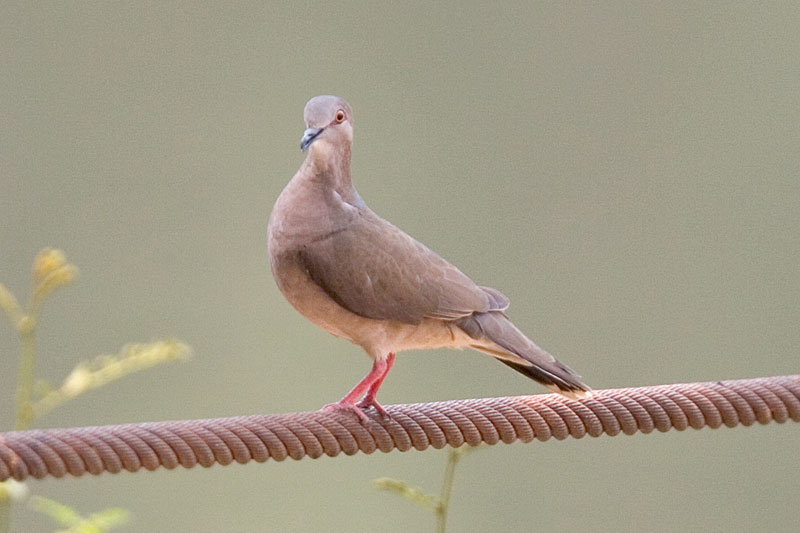
• Crown clearly bluish contrasting with the nape = L. rufaxilla; crown greyish brown blending with the nape = L. verreauxi
• Sides of the neck rusty in tone = L. rufaxilla; or greyish = L. verreauxi
• Hindneck and nape grey with violaceous tones = L. rufaxilla; or clearly greyish = L. verreauxi
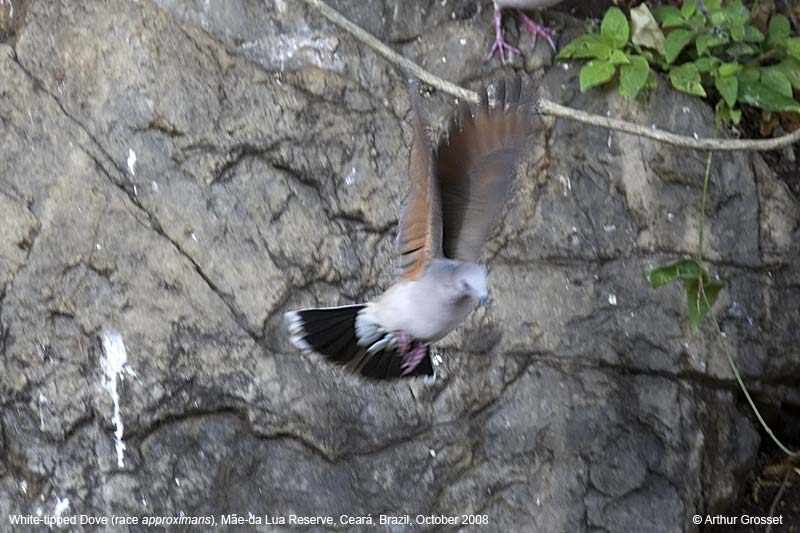
• The white tip of the tail feathers (especially the penultimate) occupies almost 25% of the feather = L. verreauxi; or only about 10% = L. rufaxilla.
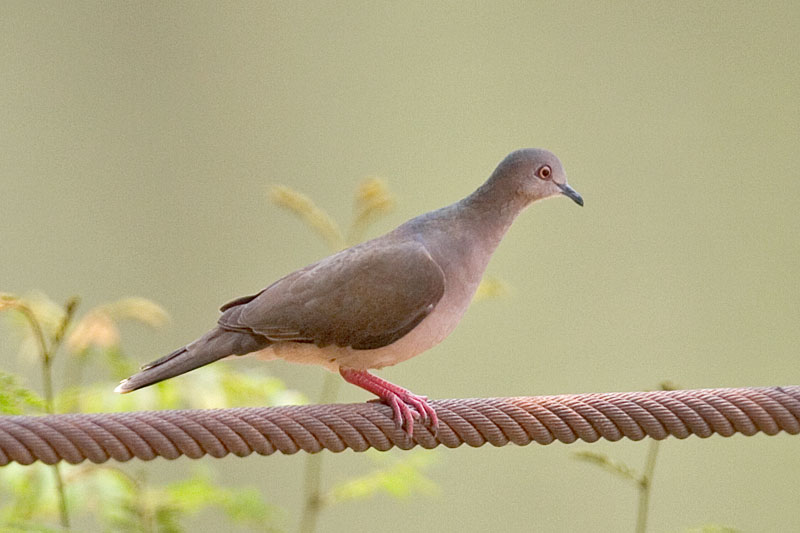
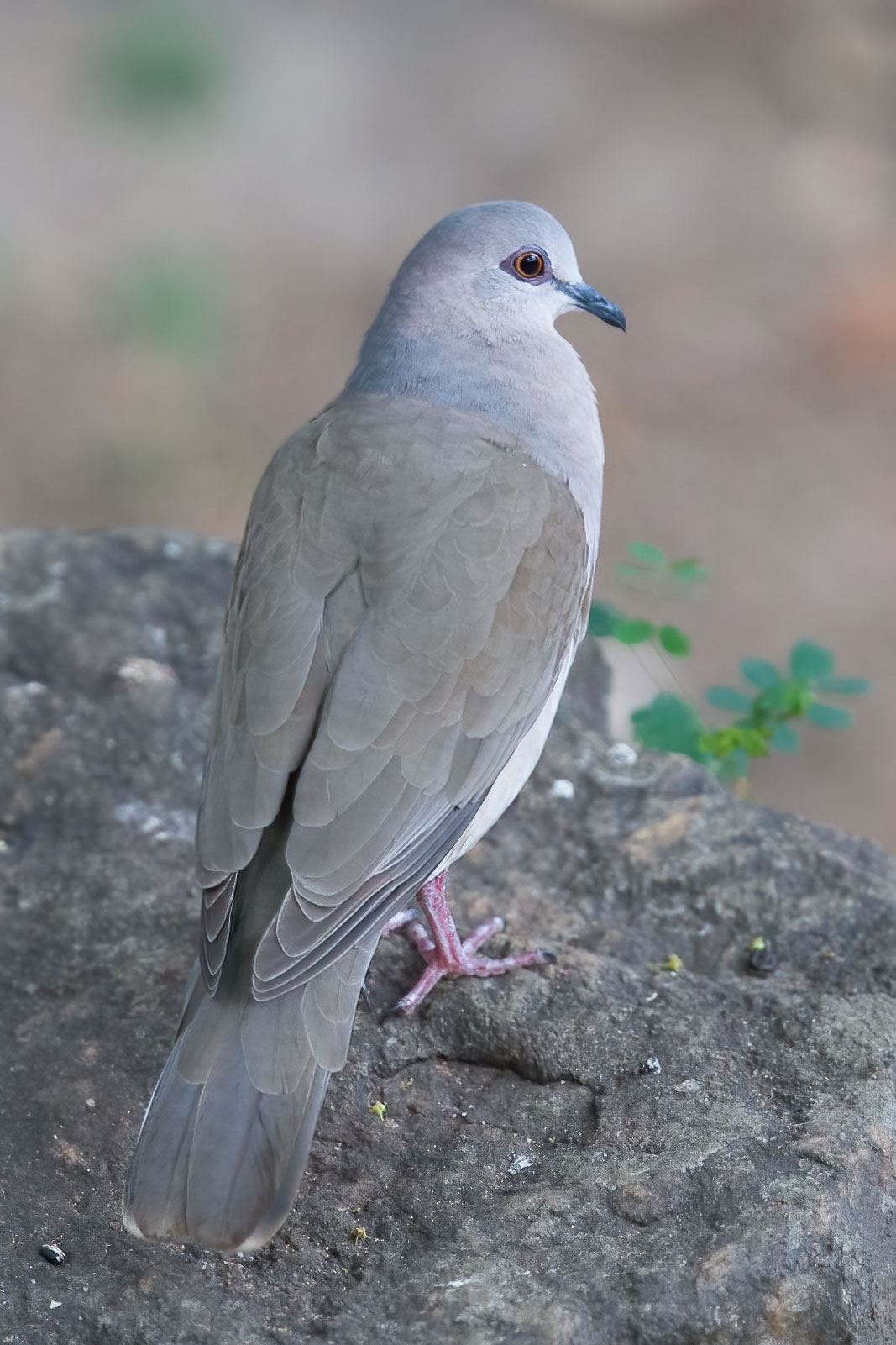
I was interested to see the chestnut on the underwings in photo 6. The scientific name for Grey-fronted Dove is Leptotila rufaxilla which derives from the Latin rufus for red and axilla for armpit. The confusing bit is that both Leptotila verreauxi and Leptotila rufaxilla have chestnut underwings.
There are recordings on xeno-canto and additional information is available through Avibase.
| Previous Page | Back to Index | Next Page |