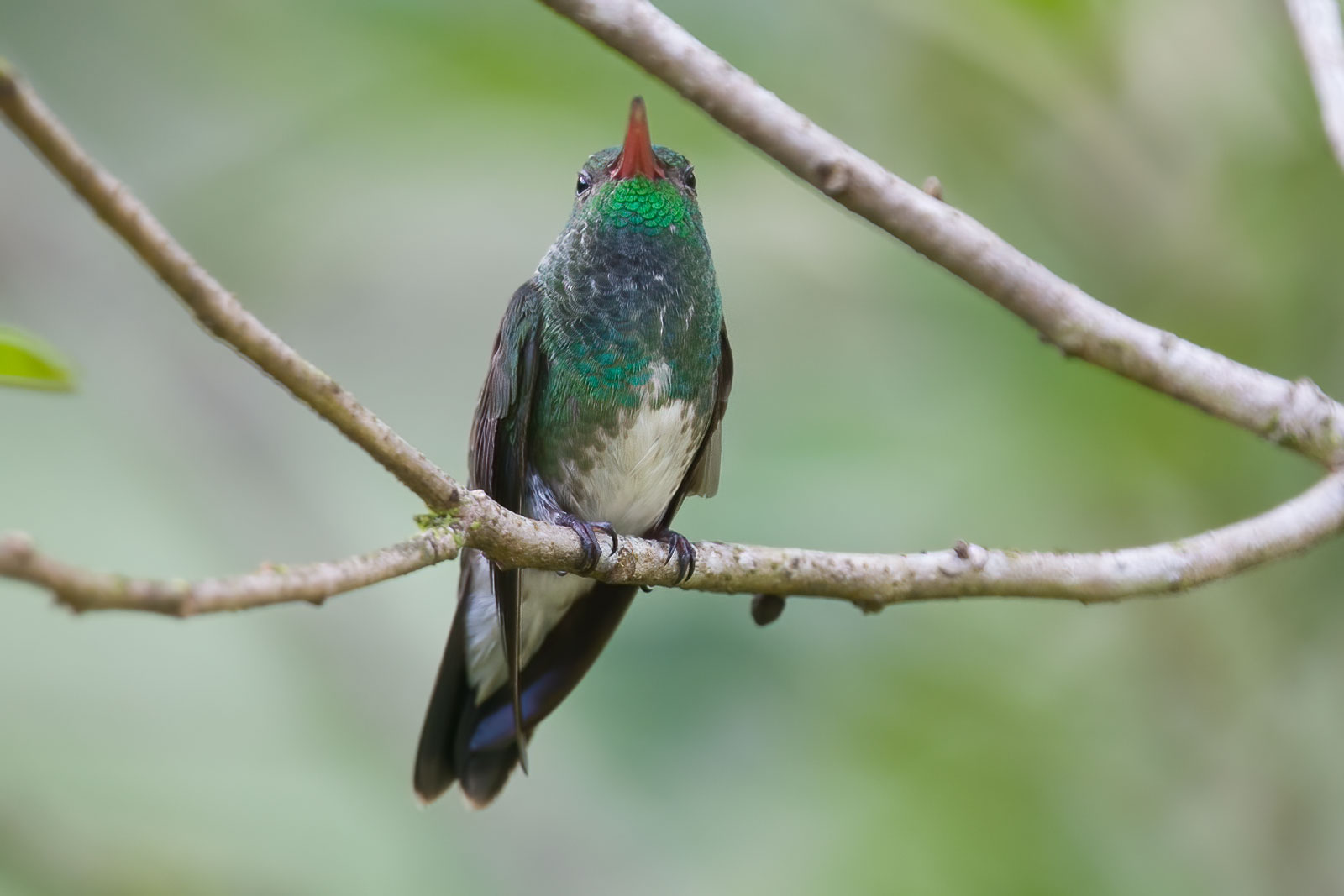
| Glittering-throated Emerald (Amazilia fimbriata) (aka Polyerata fimbriata - see HBW, Volume 5, Page 601) Brazilian name: beija-flor-de-garganta-verde |
||||
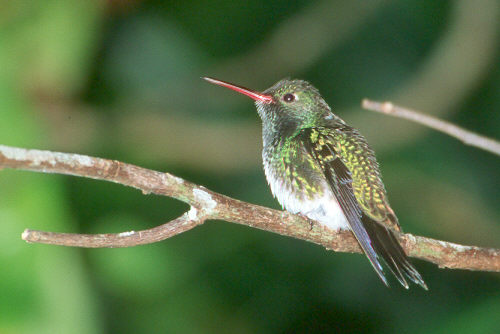
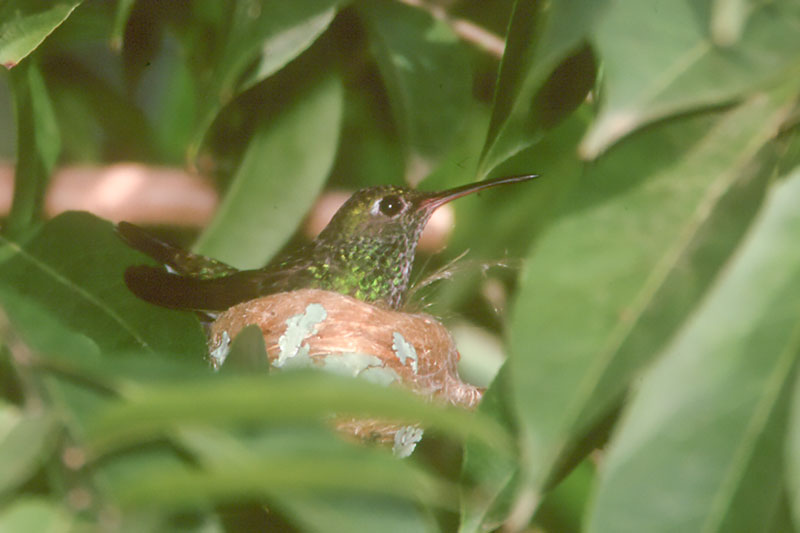
| Brazil The first two photos are of a male and show the straight bill with the black upper mandible and the pink lower mandible. The males have the throat a "glittering" green while the females have a white stripe up the middle of the throat. The Glittering-throated Emerald is found in a wide variety of open and semi-open habitats including gardens but it is not found in the interiors of forests. |
||||
| Glittering-throated Emeralds are found from Colombia through to south-east Brazil. The first two photos were taken in south-east Brazil and are of the subspecies Amazilia fimbriata tephrocephala. This tends to be larger than the other subspecies such as the nominate A. f. fimbriata. | ||||
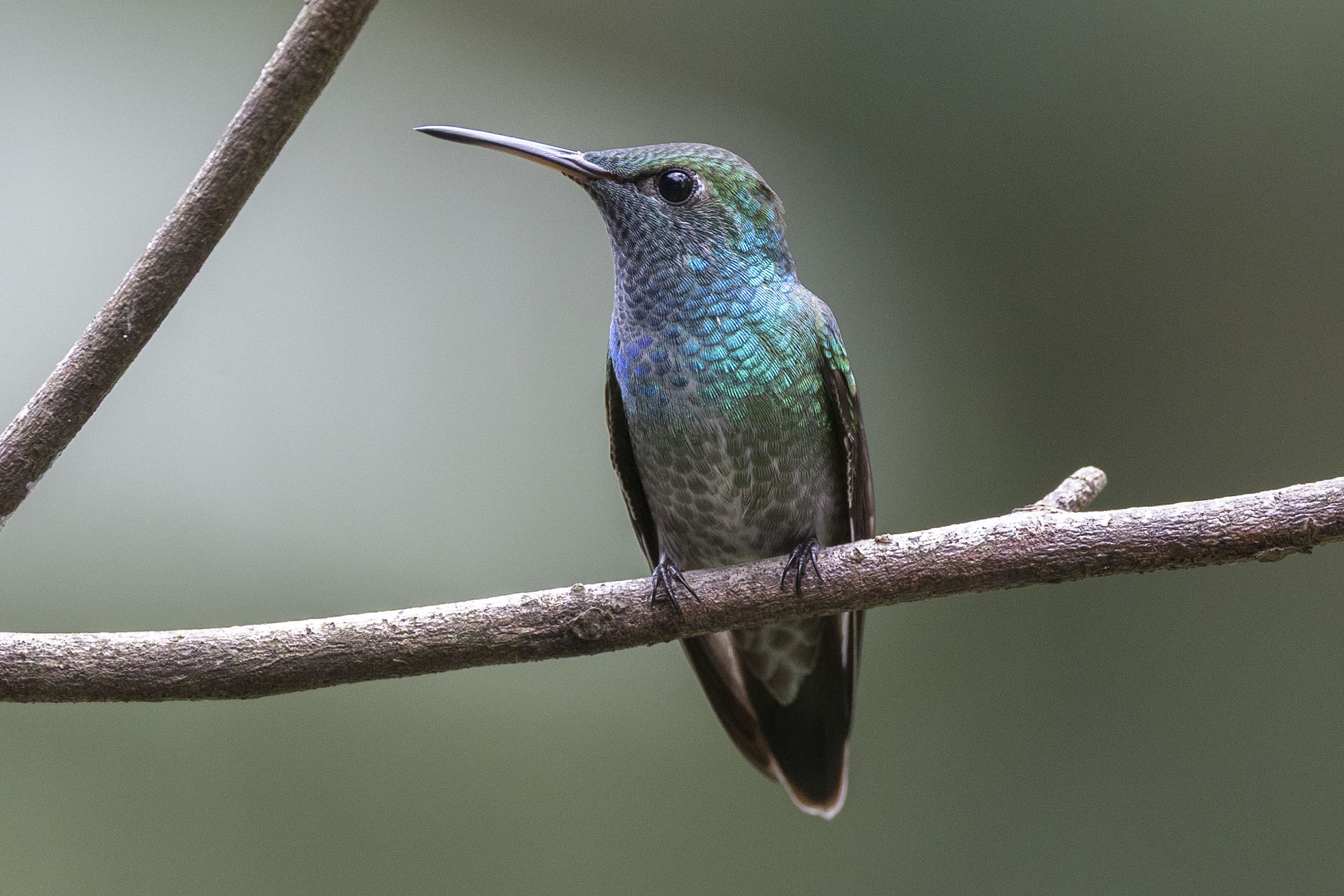
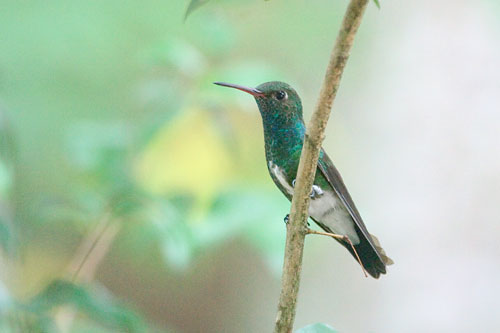
| The third photo shows a female Glittering-throated Emerald sitting on a nest. The nest was on a horizontal branch in a shrub about 2 metres off the ground and consisted of a neat cup constructed from what looked like fine strands of dry vegetation, cobwebs and lichen.This photo was taken in Minas Gerais and shows a female of the subspecies A. f. nigricauda. | ||||
| The genus name Amazilia comes from Amazili, an Inca heroine in Jean François Marmontel's 1777 novel "Les Incas, ou la destruction de l'Empire du Pérou", according to Jobling There are illustrations in Sick, Plate 21; HBW, Volume 5, Page 600; and Hilty & Brown, Plate 14. | ||||
| There are recordings and a distribution map on xeno-canto. | ||||
|