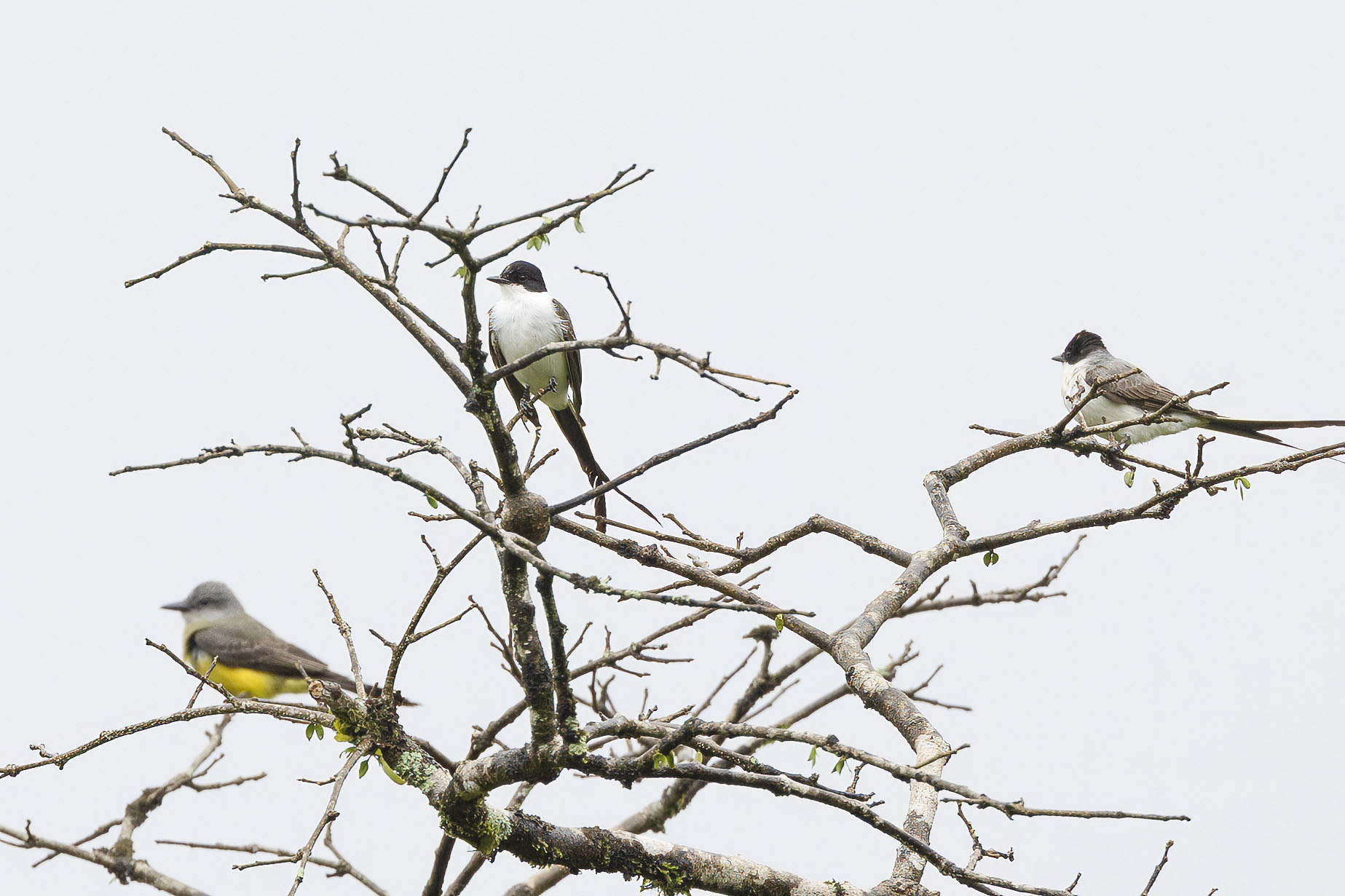
| Fork-tailed Flycatcher (Tyrannus savana) | ||
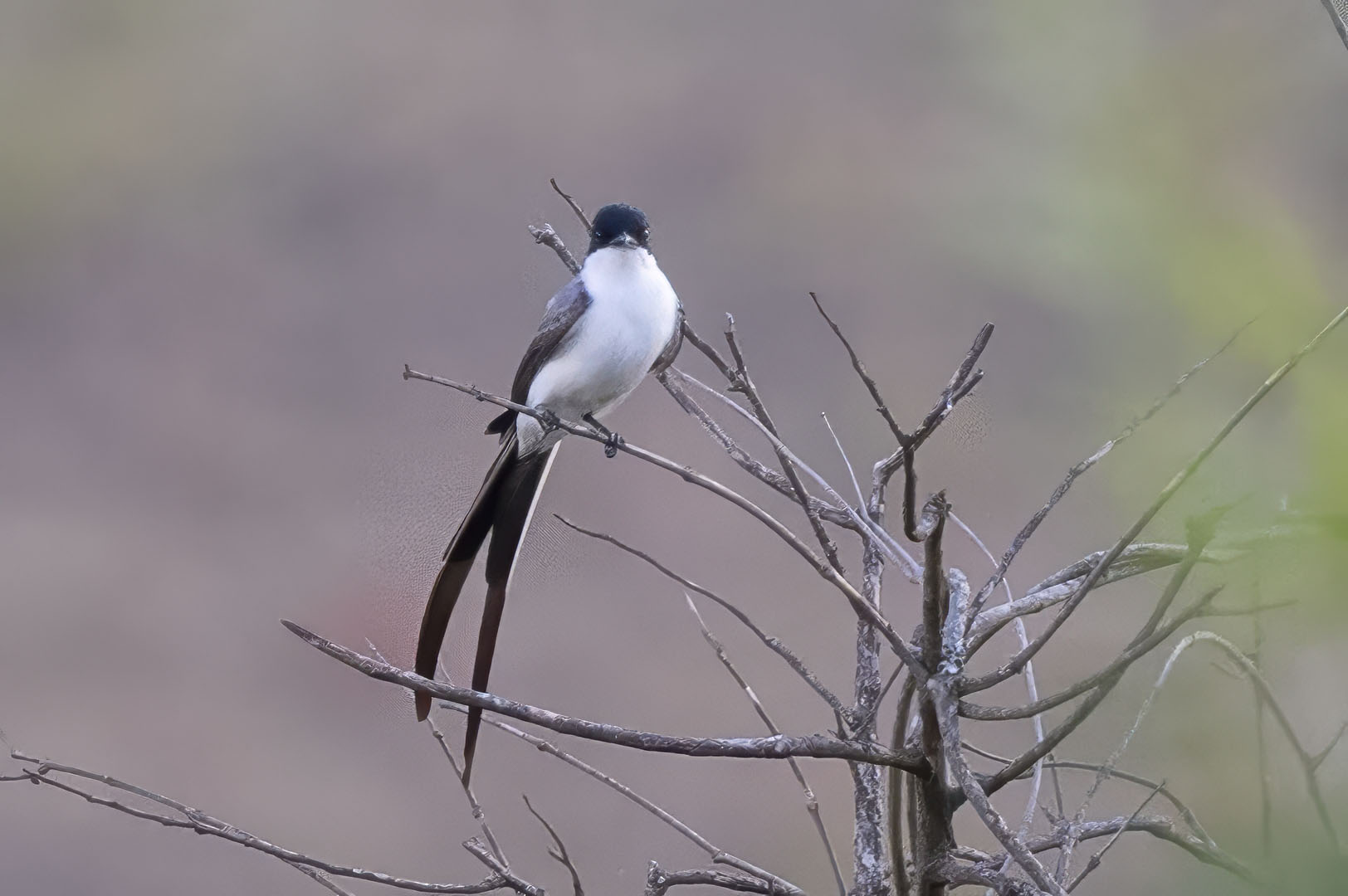
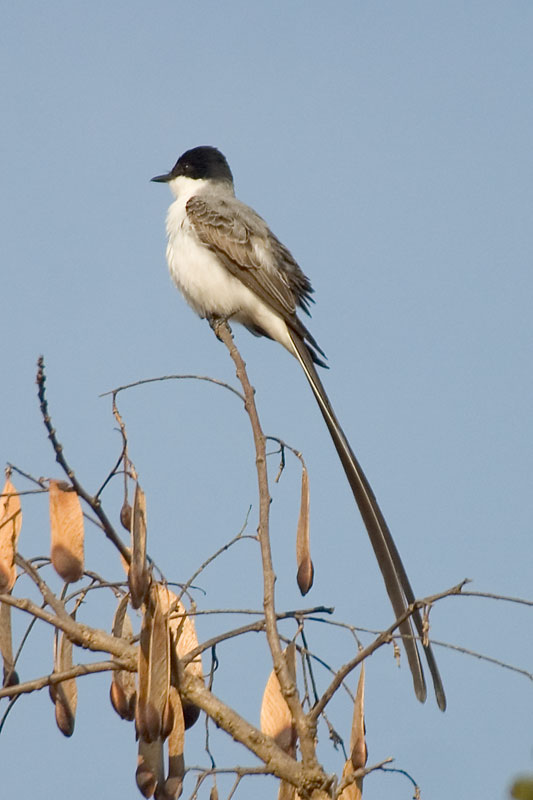
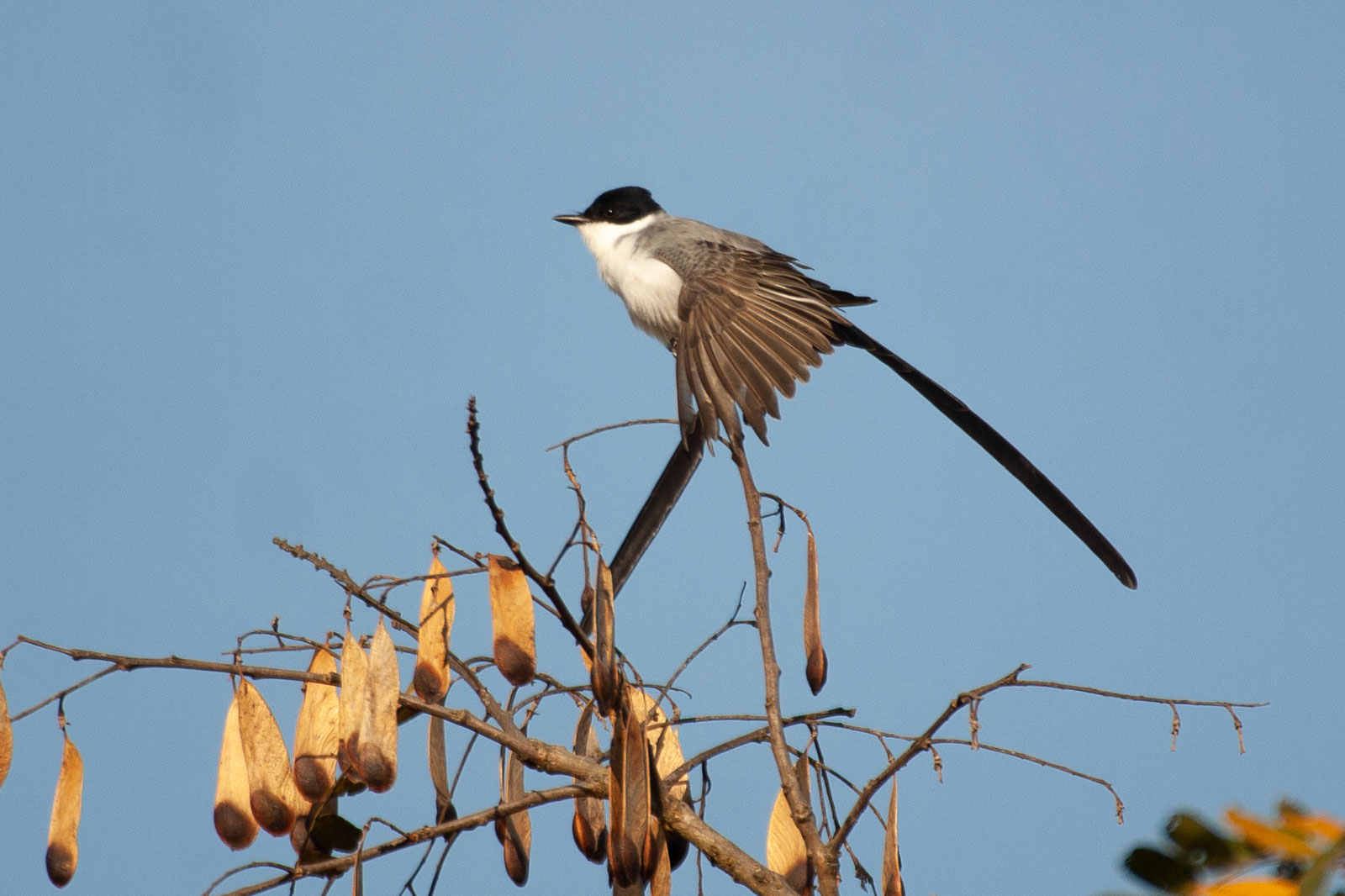
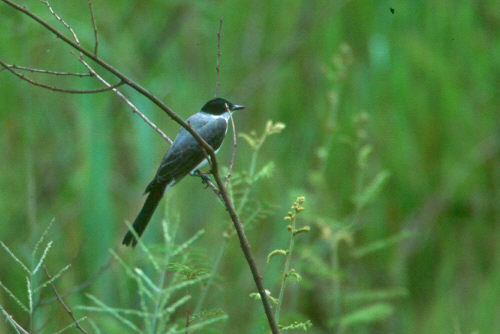
| Brazil The Fork-tailed Flycatcher normally has spectacularly long tail feathers although these can be shorter in females, immatures and moulting birds (see photo 3) |
||
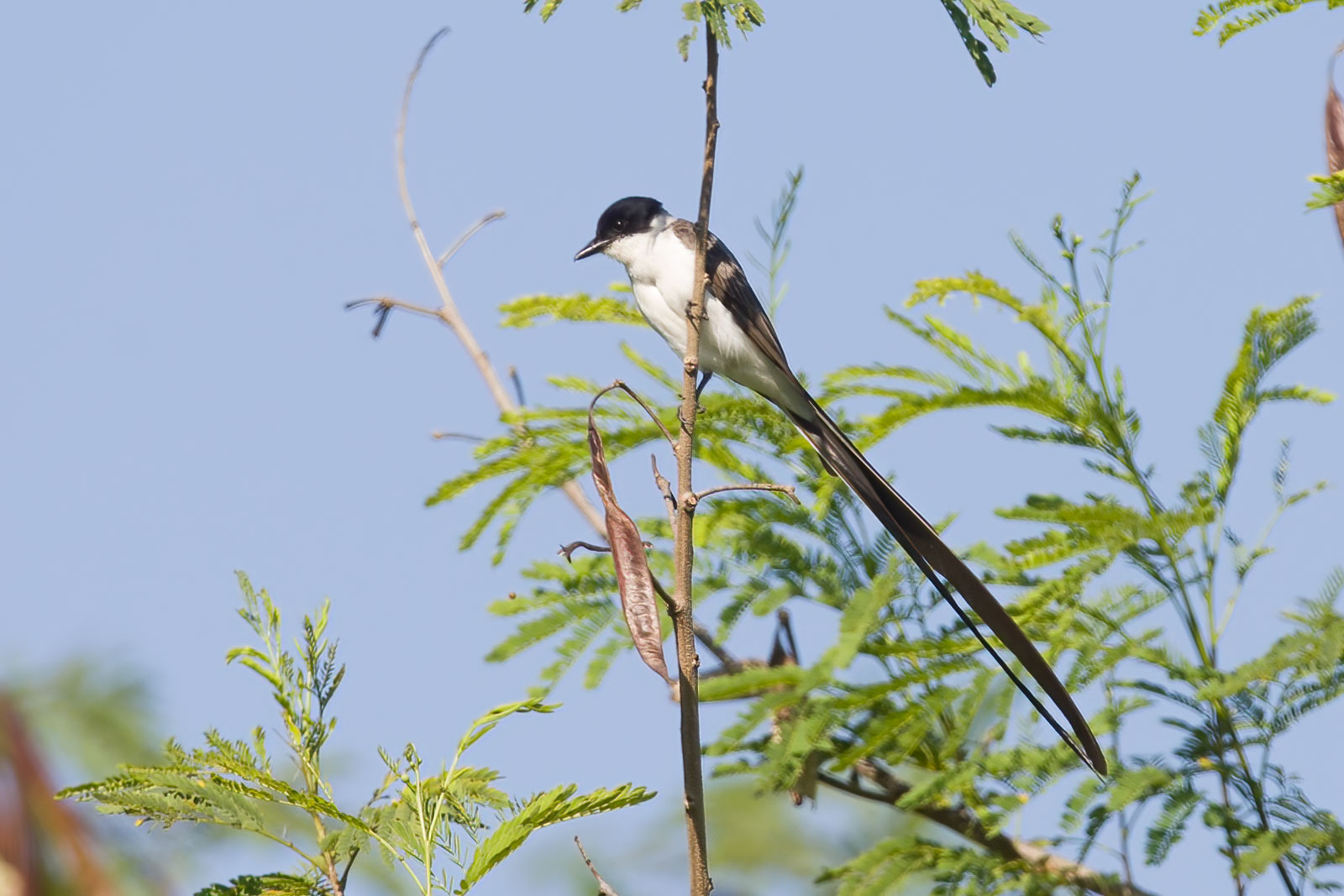
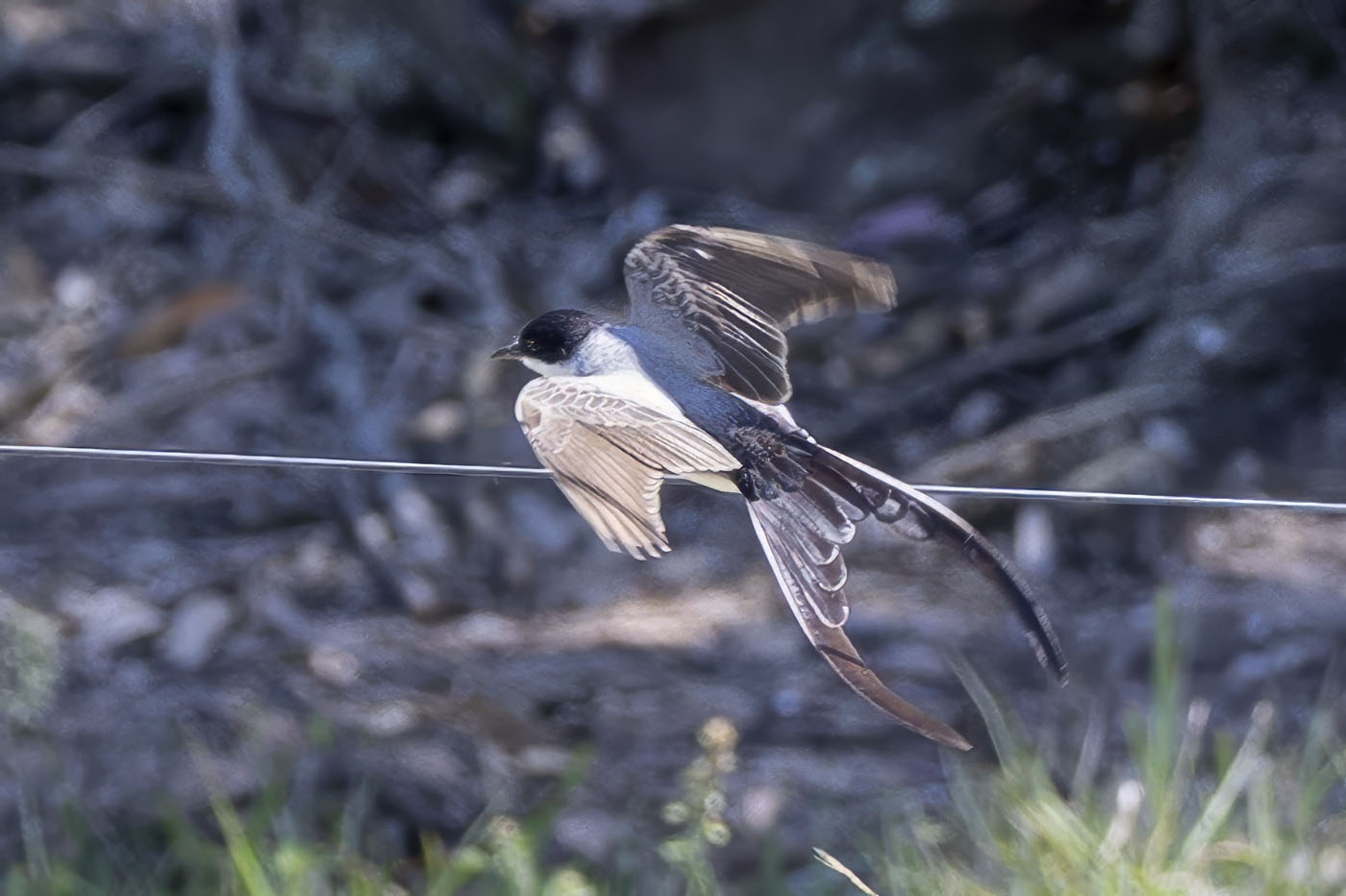
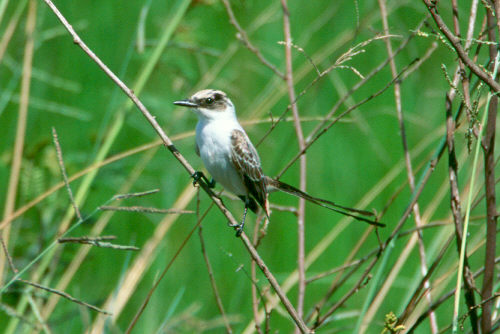
| The head is black and it is sometimes possible to see a yellow stripe on the crown. The back is pale grey and the underparts are pure white. Immatures (photo 4) have brownish heads. Different subspecies are identified by the pattern of notches on the outer primaries. |
||
| It is found from Mexico to central Argentina mainly east of the Andes but with some records to the west. It is migratory over much of its range appearing in the Amazon Basin mostly during the austral winter when it can form enormous flocks. They eat fruit and berries as well as insects. |
||
| They are normally to be seen in savannas and pastures where there are trees or low bushes but during migration they can be found in almost any type of habitat. There are illustrations in Ridgely & Tudor, Volume 2, Plate 44; Hilty & Brown, Page 518; Ridgely & Greenfield, Plate 74 and Sick, Page 483. | ||
|