
The Saw-billed Hermit is a Brazilian endemic found in the coastal forest
of south-east Brazil up to about 500 metres.
See the distribution map at xeno-canto. .
It is one of the largest and heaviest of hummingbirds weighing in at about 10 grams.
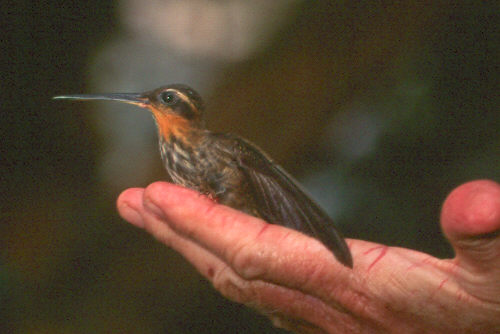
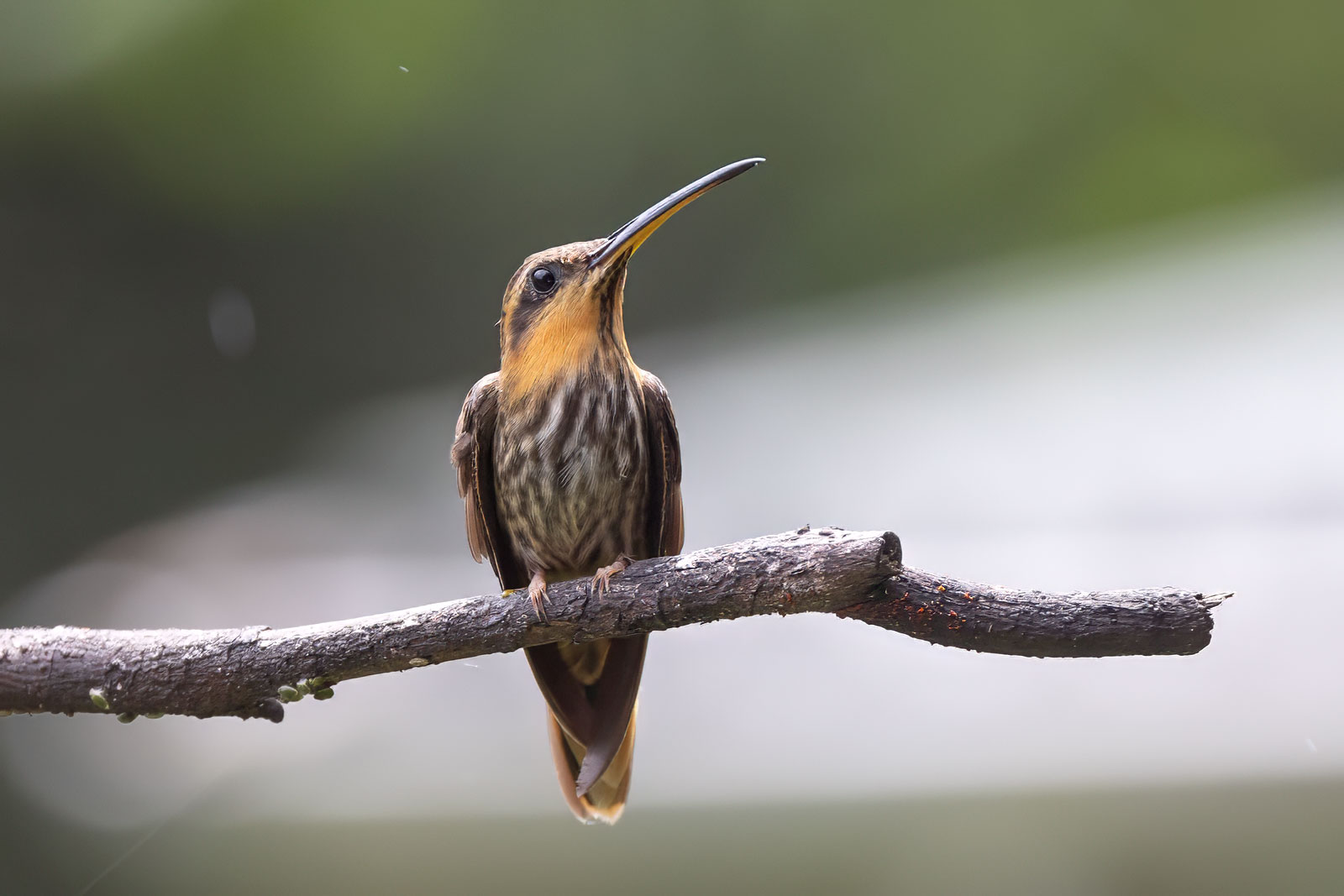
The name "saw-billed" comes from tiny serrations on the bill.
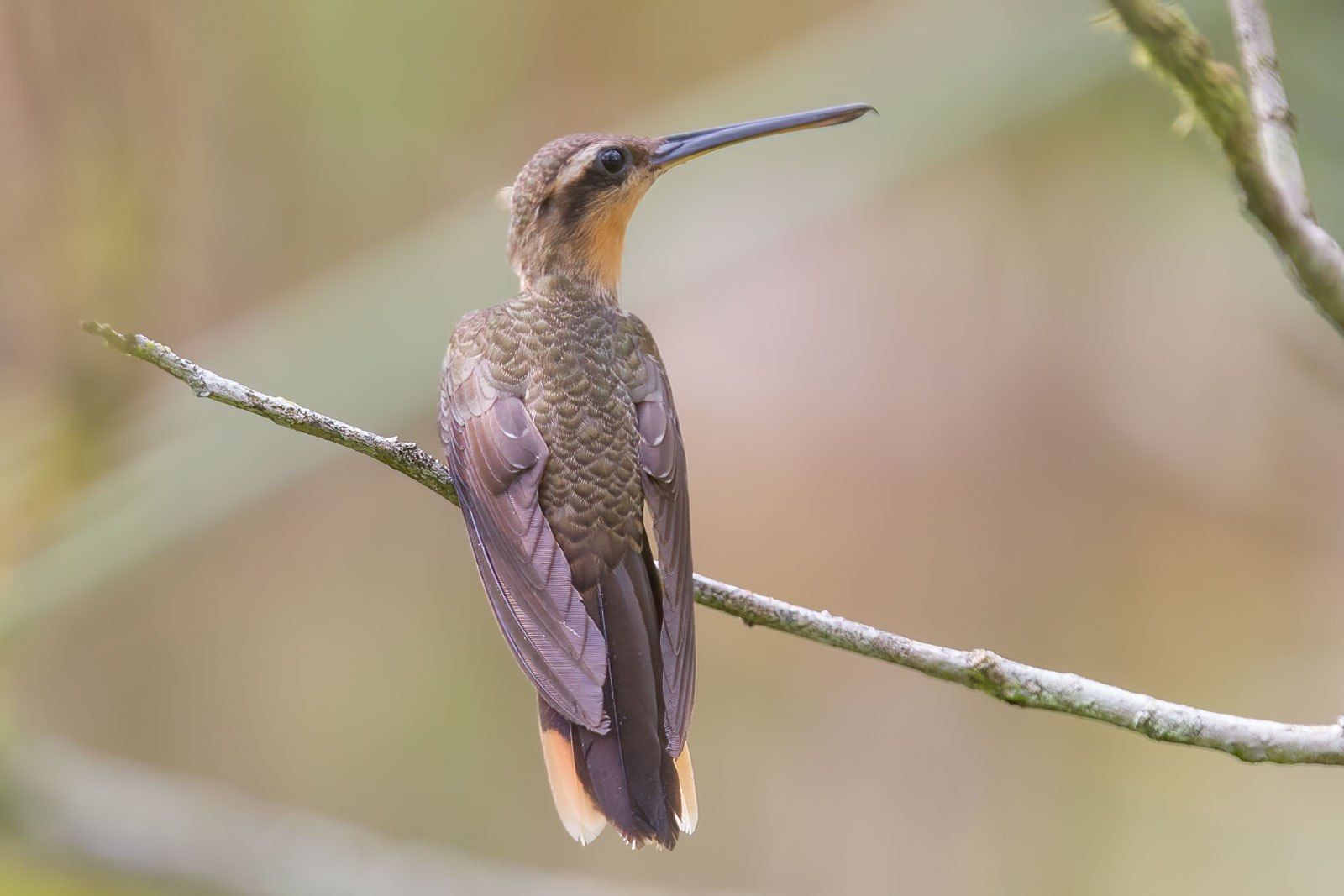
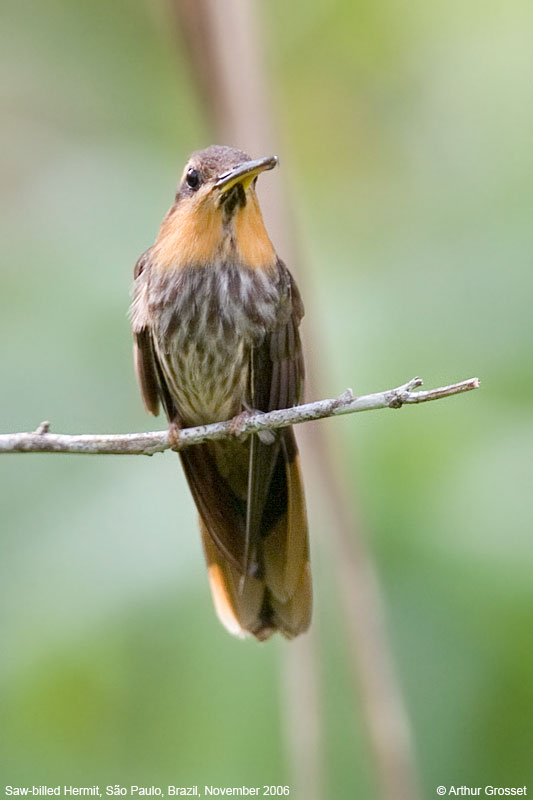
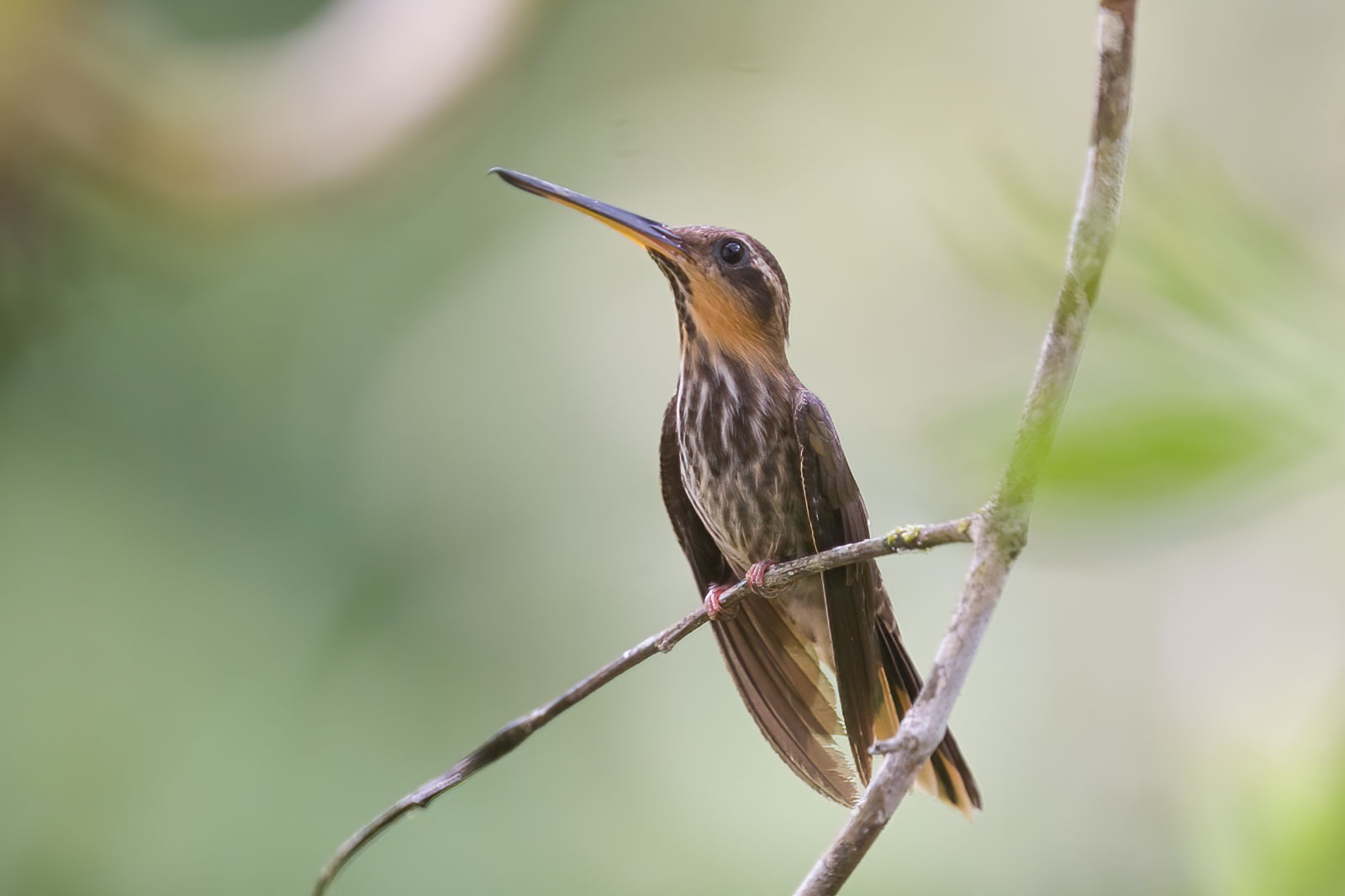
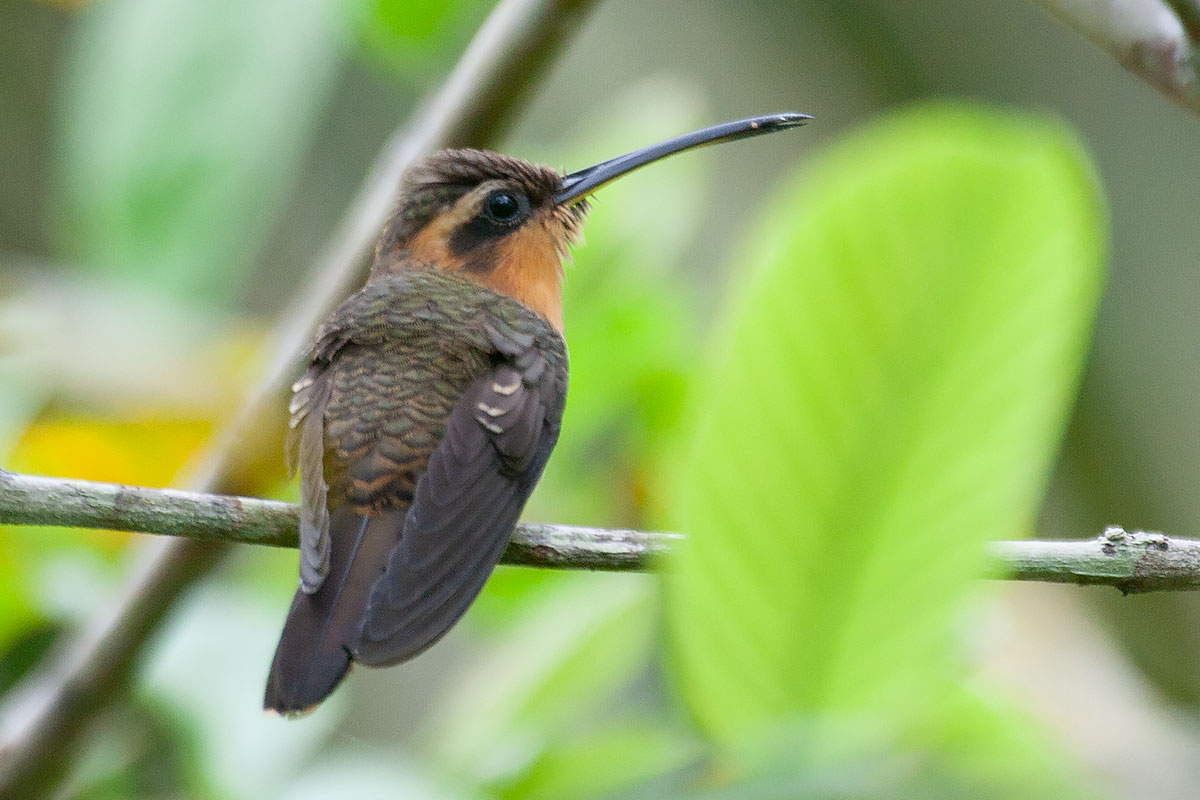
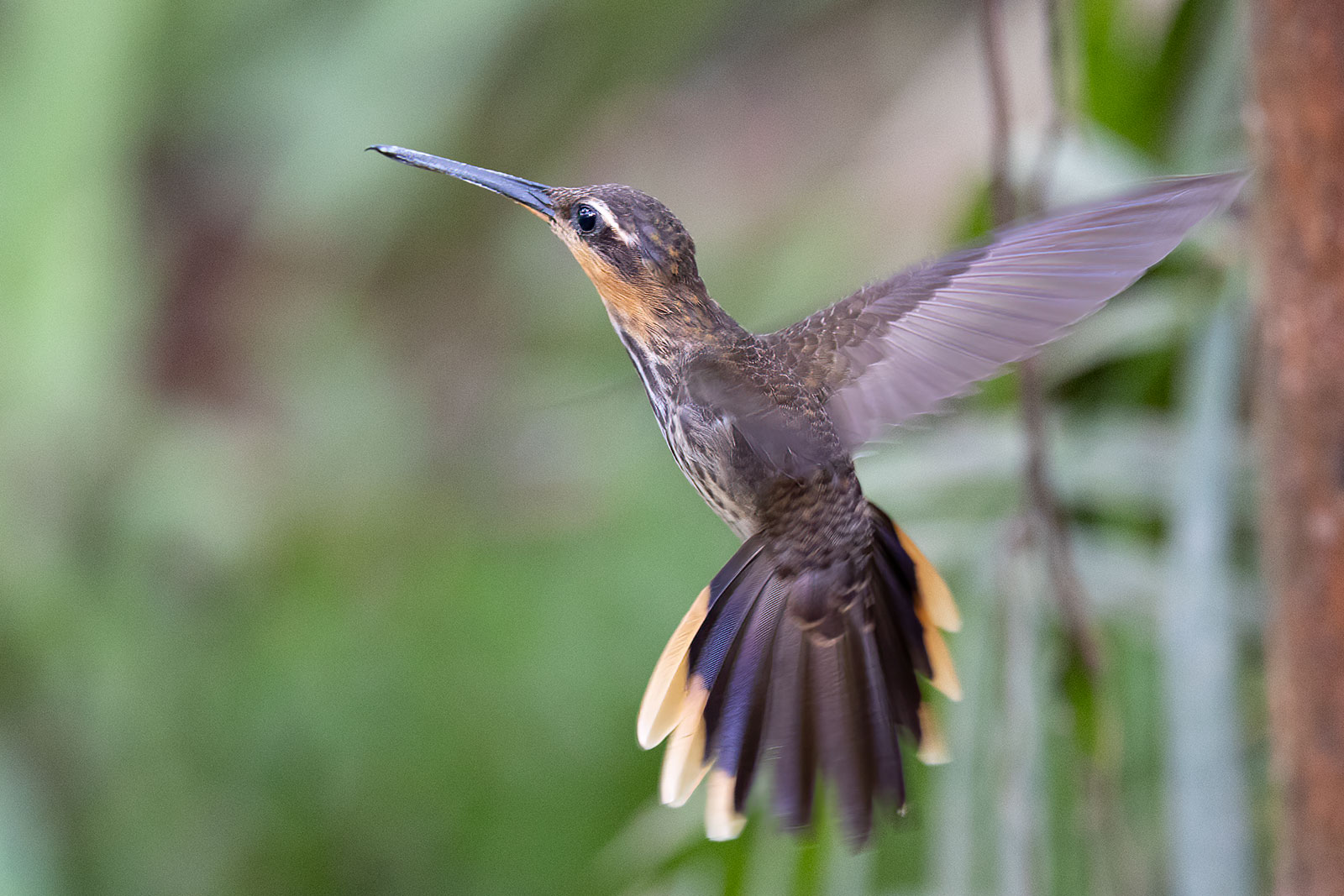
You are supposed to be able to tell the female by the shorter, slightly decurved bill without the small hooked tip of the male. The male is also more strongly marked below. On this basis I would say that photos 3, 4 and 5 are of a male while photos 1 and 6 are of a female.
Hermits are "trap-line feeders" which means that they visit plants for nectar along a fairly long route as opposed to most other hummingbirds who are highly territorial and will vigorously defend the nectar sources in its patch.
| Previous Page | Back to Index | Next Page |