Brazilian name: formigueiro-do-nordeste
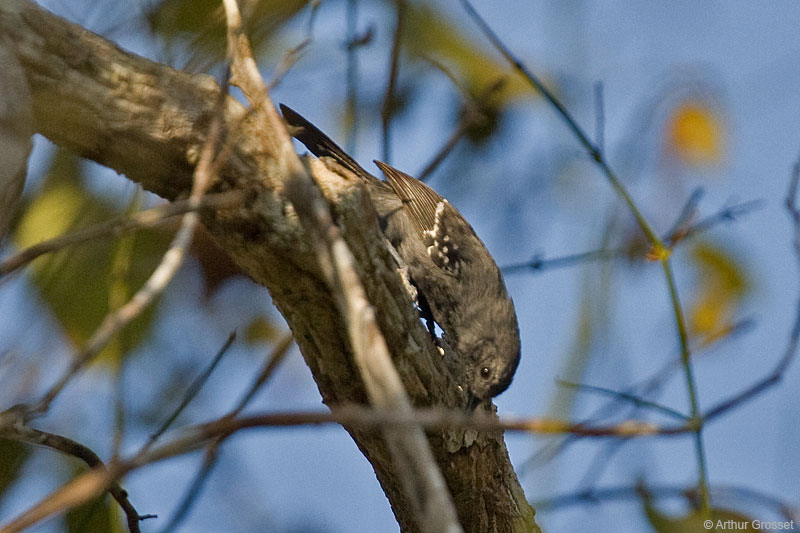
The Narrow-billed Antwren is found in Bahia and north-east Minas Gerais where it inhabits deciduous and semi-deciduous forest especially where there are vine tangles and ground bromeliads. At Boa Nova it is found in the so-called "dry forest".
It is classified as Near Threatened by Birdlife International.
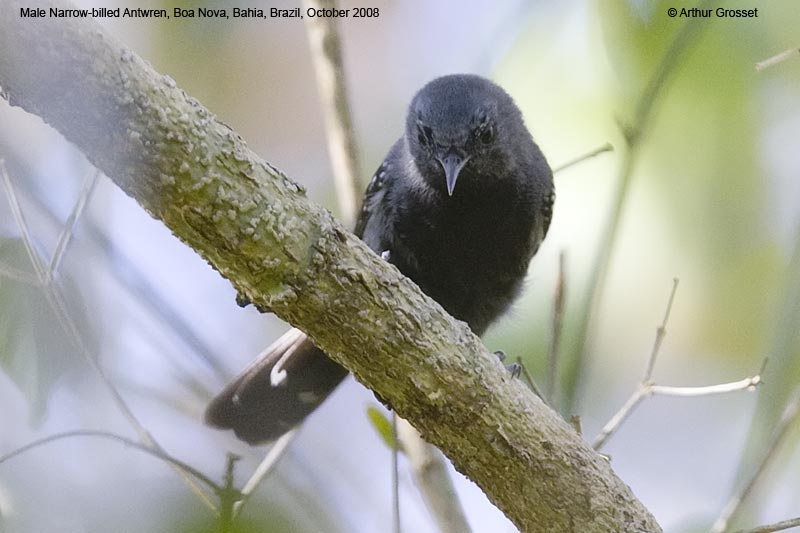
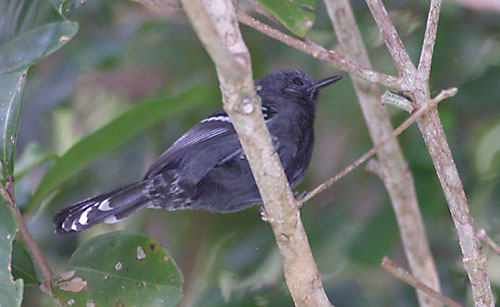
The male is dark grey above with throat and breast black. The wings are also black with 2 white wing-bars and there is white on the flanks though this is often hidden. The tail is long and the outer tail feathers have white tips.
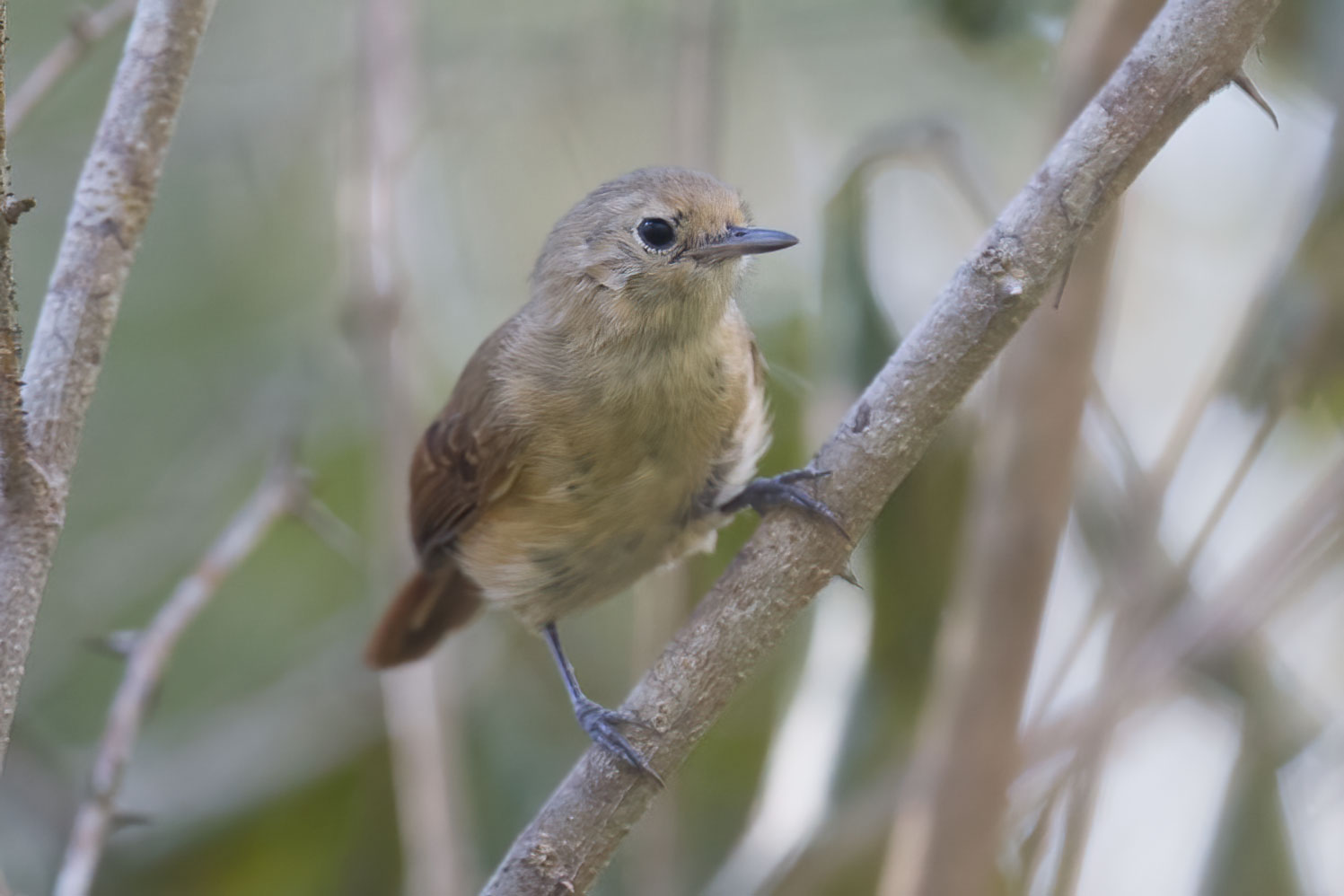
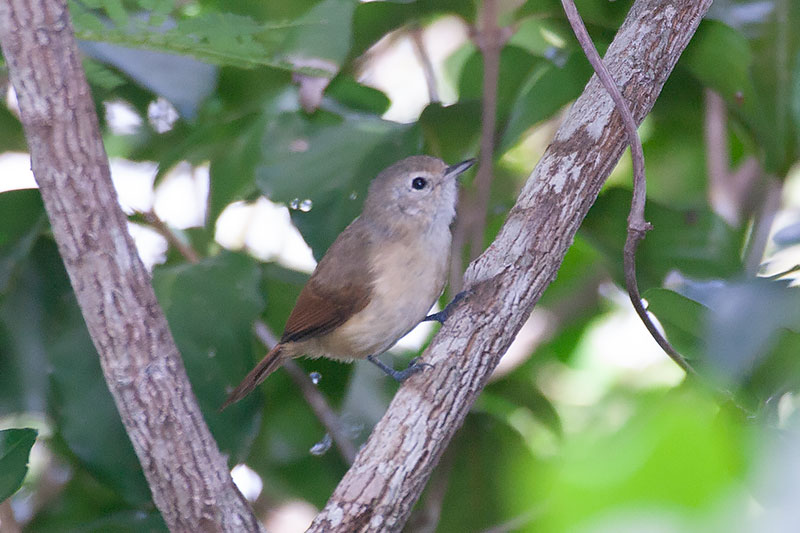
The female, seen here in photos 4 and 5, is olive-brown above with two indistinct buff wing-bars and ochraceous below.
There is an illustration in Ridgely & Tudor, Volume 2, Plate 20.
| Previous Page | Back to Index | Next Page |